
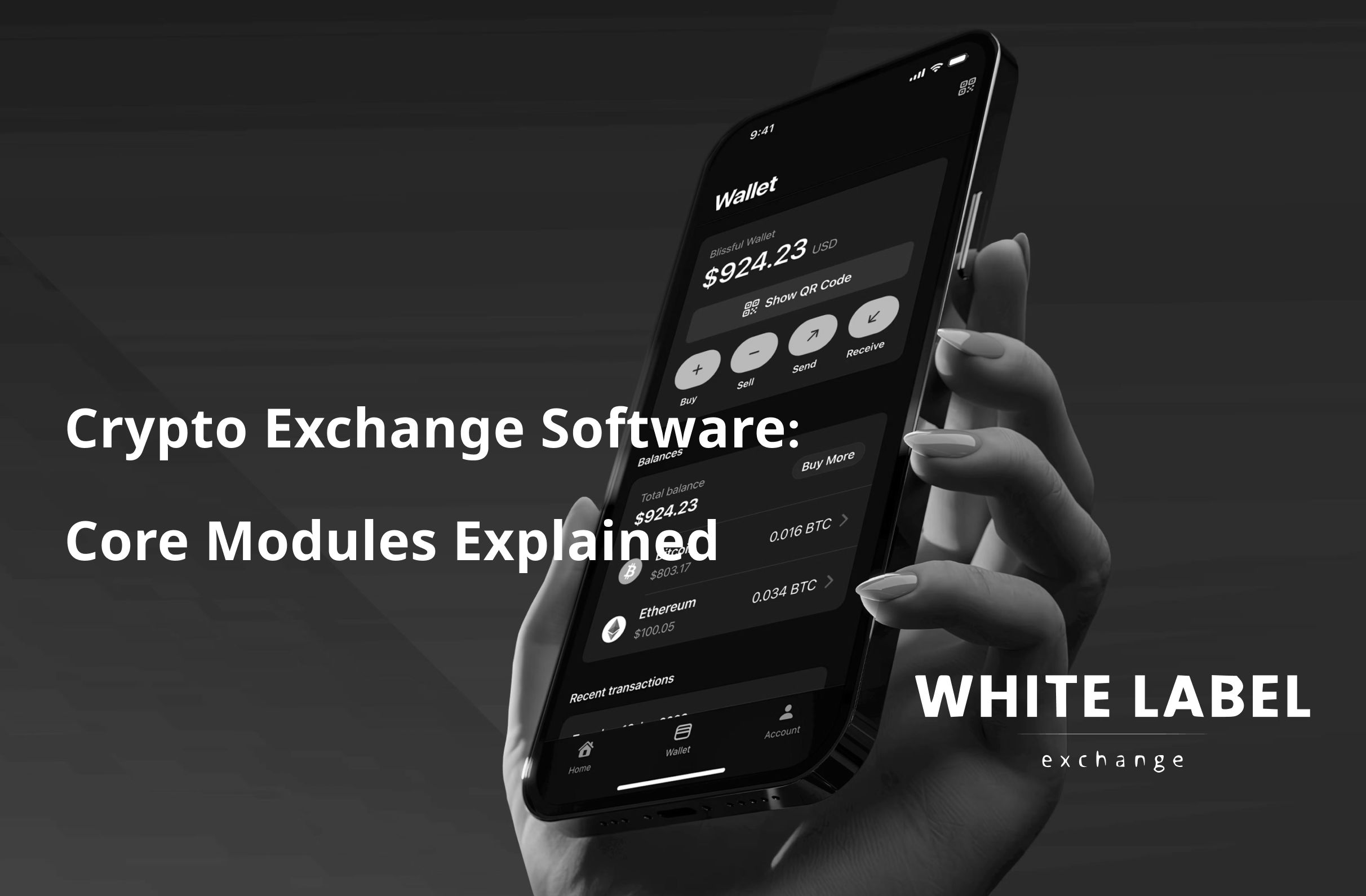
The digital asset industry moves at breakneck speed. For entrepreneurs and institutions looking to capture market share, the technology underpinning your platform is the difference between leading the pack and getting left in the dust. But when you decide to build a crypto trading platform, you’re faced with a dizzying array of technical choices. What makes up the core architecture? Do you code it from scratch, or do you leverage a deployment-ready white label crypto exchange software?
Navigating the ecosystem of crypto exchange software solutions doesn’t have to be a guessing game. Let’s pull back the curtain on the essential modules that power a high-performance exchange, compare your software options, and reveal why industry leaders are turning to white label exchange software to launch faster and smarter.
The Anatomy of Crypto Exchange Platform Software
A crypto exchange isn’t a single monolithic application; it’s a complex ecosystem of interconnected modules working in real-time. Whether you are launching a spot trading platform, a derivatives hub, or an OTC desk, the core architecture remains fundamentally the same. Here are the six pillars of enterprise-grade crypto trading platform software.
1. The Matching Engine: The Beating Heart
The matching engine is the undisputed core of any bitcoin exchange software. It is the algorithmic brain that pairs buy and sell orders. When a user places a market or limit order, the matching engine instantly scans the order book to find a counterparty.
Speed and fairness are non-negotiable. A top-tier matching engine processes tens of thousands of transactions per second (TPS) with microsecond latency. If your engine lags during a market surge, traders will experience slippage and lost opportunities, prompting them to flee to competitors. Furthermore, the engine must flawlessly execute complex order types—stop-loss, take-profit, and fill-or-kill—ensuring that crypto exchange platform software operates with absolute precision.
2. The Wallet System: The Impenetrable Vault
Without secure wallets, you don’t have a business; you have a liability. The wallet module within your crypto currency exchange software is responsible for generating, storing, and managing digital assets. Best practices dictate a hybrid architecture:
- Cold Storage: The vast majority of user funds (typically 90-95%) are kept offline in air-gapped cold wallets, completely immune to online hacking attempts.
- Hot Wallets: A smaller pool of funds remains connected to the internet to facilitate automated, instant daily withdrawals.
- Warm Wallets: An intermediate layer that refills hot wallets when they run low, without exposing the entire cold storage reserve.
Advanced cryptocurrency exchange software solutions employ Multi-Party Computation (MPC) or multi-signature technology, requiring multiple cryptographic approvals before funds can move. This ensures that even if a hot wallet key is compromised, the attacker cannot drain the funds.
3. The Admin Panel: The Control Room
If the matching engine is the heart, the admin panel is the brain. This back-office interface gives you total operational control over your platform. When you buy crypto exchange software, the admin panel’s depth is a critical differentiator.
A robust admin panel allows you to:
- Manage users, resolve account issues, and adjust KYC statuses.
- Configure trading pairs, listing new tokens or delisting underperforming ones.
- Set and dynamically adjust trading fees (maker/taker models).
- Monitor real-time trading volume, revenue, and system health.
- Generate compliance reports for regulators.
Without a granular, intuitive admin panel, managing a growing exchange becomes an operational nightmare.
4. KYC and AML Integration: The Shield
Regulatory compliance is no longer optional. Operating a centralized exchange requires stringent identity verification and transaction monitoring. This is where aml software for crypto exchange comes into play.
Modern crypto exchange software integrates seamlessly with third-party KYC/AML providers (like Sumsub, Jumio, or Chainalysis). When a user signs up, the software automates the document verification process, checking IDs against global watchlists and ensuring liveness detection. On an ongoing basis, AML modules monitor transaction patterns, flagging suspicious activity—such as rapid movement of funds from high-risk wallets—so your compliance team can investigate. Integrating this directly into your white label cryptocurrency exchange software ensures you meet MiCA, FATF, and local regulatory standards from day one.
5. API Architecture: The Bridge
No exchange is an island. Your platform must communicate with the outside world, and that’s the job of the Application Programming Interface (API). A high-performance API allows your exchange to:
- Aggregate Liquidity: Connect to external liquidity providers (like Binance or Kraken) via API to ensure deep order books from the moment you launch.
- Enable Algorithmic Trading: Pro traders and bots rely on APIs to execute automated strategies. Providing a fast, documented REST and WebSocket API is crucial for attracting high-volume traders.
- Integrate Third-Party Tools: From portfolio trackers to tax reporting software, a flexible API makes your platform part of the broader crypto ecosystem.
If the API is sluggish or unstable, institutional traders will bypass your platform entirely.
6. The Mobile App: The User Gateway
We live in a mobile-first world. Over 70% of retail crypto trading happens on smartphones. A deployment-ready white label crypto trading platform must include native iOS and Android applications.
A mobile app isn’t just a scaled-down website; it requires an optimized UI/UX for smaller screens, push notifications for price alerts and order executions, and biometric authentication (FaceID/TouchID) for seamless security. Providing a sleek, responsive mobile experience is essential for user retention.
Niche Modules: Expanding Your Revenue Horizons
While the core six modules form the foundation, modern crypto exchange software solutions often include specialized features to diversify revenue and target specific demographics.
- OTC Crypto Exchange Software: For high-net-worth individuals and institutional players, standard order books aren’t enough. Otc crypto exchange software facilitates large block trades directly between two parties, bypassing the public order book to prevent massive price slippage. Crypto otc trading platform development requires a separate escrow and negotiation interface integrated into the main platform.
- Crypto Exchange Monitoring Software: This is a specialized layer that tracks server health, API latency, and trading anomalies. It can detect market manipulation tactics like spoofing or wash trading, safeguarding the integrity of your platform.
- Hybrid Crypto Exchange Software: Some providers offer hybrid crypto exchange software, blending the speed and liquidity of a centralized exchange (CEX) with the non-custodial security of a decentralized exchange (DEX), allowing users to trade directly from their private wallets.
Software Deployment Models: The Ultimate Comparison
When you decide to launch, you have three primary paths to acquire crypto exchange software. Understanding the trade-offs is vital for your business strategy.
| Feature | Open-Source Software | Custom-Built Software | White-Label Crypto Exchange |
| Time to Market | Months (requires heavy dev) | 12–18+ Months | Weeks |
| Initial Cost | “Free” (high hidden costs) | $500,000 – $2,000,000+ | $15,000 – $50,000 |
| Security | Risky (publicly known vulnerabilities) | High (if properly audited) | High (pre-audited & tested) |
| Customization | Unlimited (with heavy coding) | Unlimited | High (UI/UX, features, fees) |
| Maintenance | Entirely on you | Entirely on you | Handled by Provider |
| Liquidity | Must build from scratch | Must build from scratch | Pre-integrated / Easy API |
1. Open Source Crypto Exchange Software
There are free, open source crypto exchange software options available on GitHub. While the appeal of zero licensing fees is strong, the reality is harsh. Crypto exchange software open source projects are often outdated, poorly documented, and riddled with security vulnerabilities. You will need to hire a massive development team to plug security holes, build basic features, and maintain the code. The hidden costs often exceed the price of a premium license.
2. Custom-Built Architecture
Hiring a team to code a platform from zero gives you absolute control. This is the path for massive, well-funded enterprises with years to spare. However, the cost is astronomical, and the technical risk is immense. A single bug in the matching engine or wallet code can result in catastrophic losses.
3. White-Label Exchange Software: The Deployment-Ready Choice
This is where the industry has decisively shifted. White label software allows you to license a fully built, tested, and deployed platform, rebranding it as your own.
Why choose white label crypto exchange software? The answer is agility. Instead of spending a year and a million dollars building the wheel, you lease a Ferrari, put your logo on it, and start driving immediately. You eliminate the technical overhead, bypass the security growing pains, and can pivot your business focus from server maintenance to marketing and user acquisition.
The Strategic Edge: Why the Best Choose White-Label
When evaluating crypto exchange software providers, the best white label crypto exchange software stands out because it offers a turnkey business in a box. As a cryptocurrency exchange software solution provider, the white-label vendor handles the heavy lifting:
- Pre-integrated Liquidity: Top whitelabel crypto exchange software comes with out-of-the-box connections to major liquidity hubs, meaning your users experience tight spreads and instant trade execution from minute one.
- Regulatory Readiness: Premium white label bitcoin exchange software includes built-in modules for KYC and AML compliance, making it easier to secure licenses in jurisdictions governed by strict frameworks like MiCA.
- Continuous Updates: The crypto space evolves rapidly. A reputable crypto exchange software solutions provider continuously updates the software to patch vulnerabilities, add new features, and support new blockchains—at no extra cost to you.
- Scalability: As your user base grows, your white label cryptocurrency exchange software scales automatically, handling increased traffic without crashing.
For brokers, fintech startups, and entrepreneurs, the choice is clear. When you buy crypto exchange software via a white-label model, you are purchasing speed, security, and peace of mind.
Conclusion: Launch Your Platform with Proven Technology
Building a crypto exchange from scratch is a monumental task, but it doesn’t have to be your task. By understanding the core modules—from the matching engine to the mobile app—you know exactly what to look for in a crypto exchange software solution. The smartest entrepreneurs don’t build the infrastructure; they deploy it.
Choosing the best white label cryptocurrency exchange software transforms a multi-year, multi-million-dollar gamble into a predictable, scalable, and rapid market entry. You get enterprise-grade security, deep liquidity, and a fully branded platform ready to capture trading volume from day one.
Ready to see what a deployment-ready platform looks like?
Explore the power of white-label technology today. At WhiteLabelExchange, we provide the robust, secure, and scalable white label bitcoin exchange platform software you need to succeed. Schedule your exclusive white label exchange demo and take the first step toward launching your exchange in weeks, not years.