How to Integrate a Fiat On-Ramp into a Crypto Exchange (Operator Playbook)
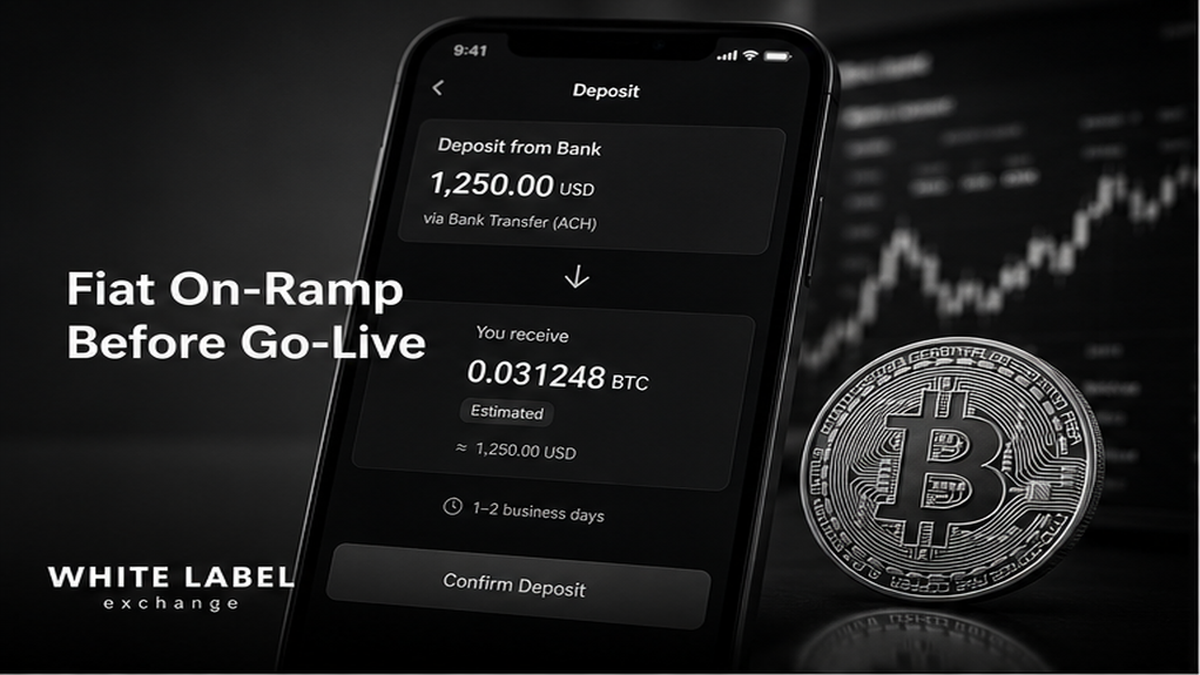
Users bounce when they cannot fund with a card or local bank transfer. A fiat on-ramp for a crypto exchange is the bridge from regular money (USD, EUR, and similar) into crypto balances – and you usually need the reverse off-ramp too. Follow this operator playbook: pick hosted, embedded, or API, map corridors and KYC ownership, wire quotes plus signed webhooks, then clear a go-live checklist so deposits credit without breaking ops.
TL;DR / Quick take: Hosted redirect for the fastest MVP; embedded widget or SDK when funding must stay in your brand UI; headless API only if you can own more eng and shared compliance. Map countries, rails, assets, and limits before you sign. Credit balances only from verified webhooks – never from a closed browser tab.
In plain terms: an on-ramp turns bank money into crypto; an off-ramp turns crypto back into bank money. Payment rails are the pipes (cards, SEPA Instant, ACH, SWIFT, PIX, UPI). Merchant of record (MoR) is who takes the payment and often runs payment KYC. White-label stacks may include fiat modules or partner hooks, but licenses and corridor coverage are not automatic – you still choose providers. Context: how to start a crypto exchange.
1. Decide the integration model: hosted, embedded, or headless API
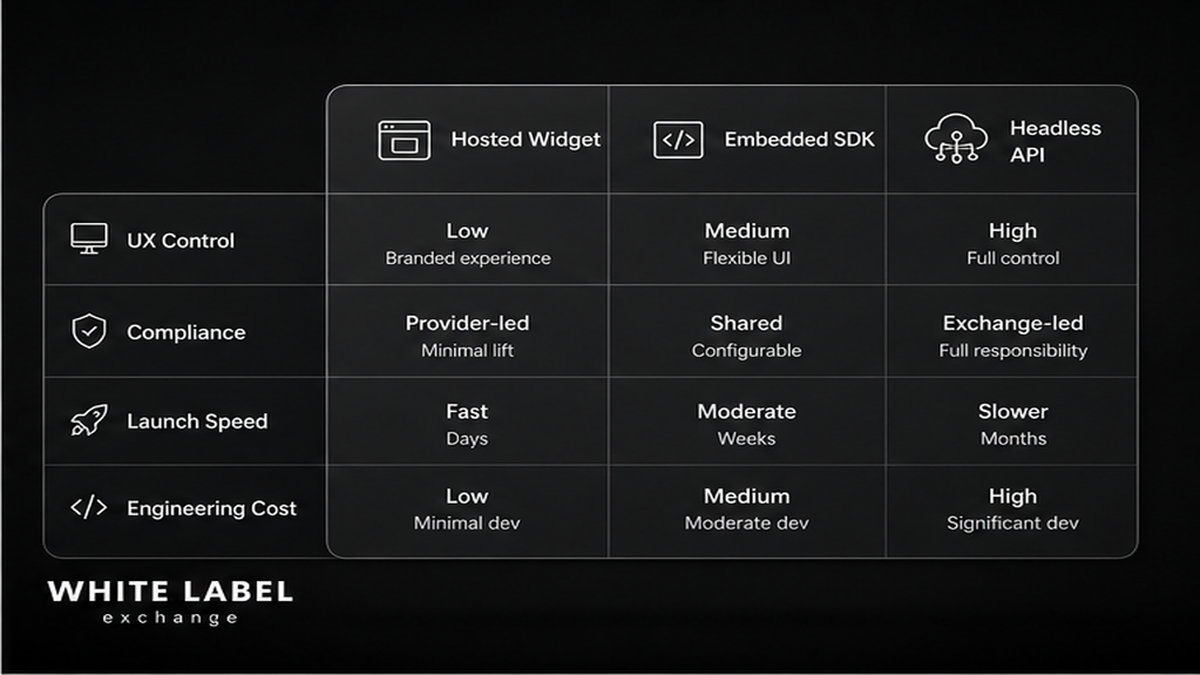
Pick the model before the vendor logo. Guides from Stripe, Cobo, and Ramp Network describe three common paths – plus an optional aggregator that routes many on-ramps through one integration.
| Criterion | Hosted redirect | Embedded widget / SDK | Headless API |
|---|---|---|---|
| Speed to MVP | Fastest | Medium | Slowest |
| Brand / UX control | Limited | Moderate to high | Full |
| Engineering load | Low | Medium | High |
| Compliance surface | Mostly gateway | Mostly gateway | Often shared with you |
| Best when | Testing corridors fast | Funding is core UX | Full UI and staffed eng |
Verdict: Hosted for corridor tests. Embedded or SDK when “Buy crypto” must feel native. Headless API only with eng capacity. Aggregators help multi-provider coverage without N builds – treat country/method counts as claimed and verify in the dashboard.
Do this: document the model for product, compliance, and eng. Do not polish UI before the corridor matrix exists.
2. Coverage checklist: countries, rails, assets, limits
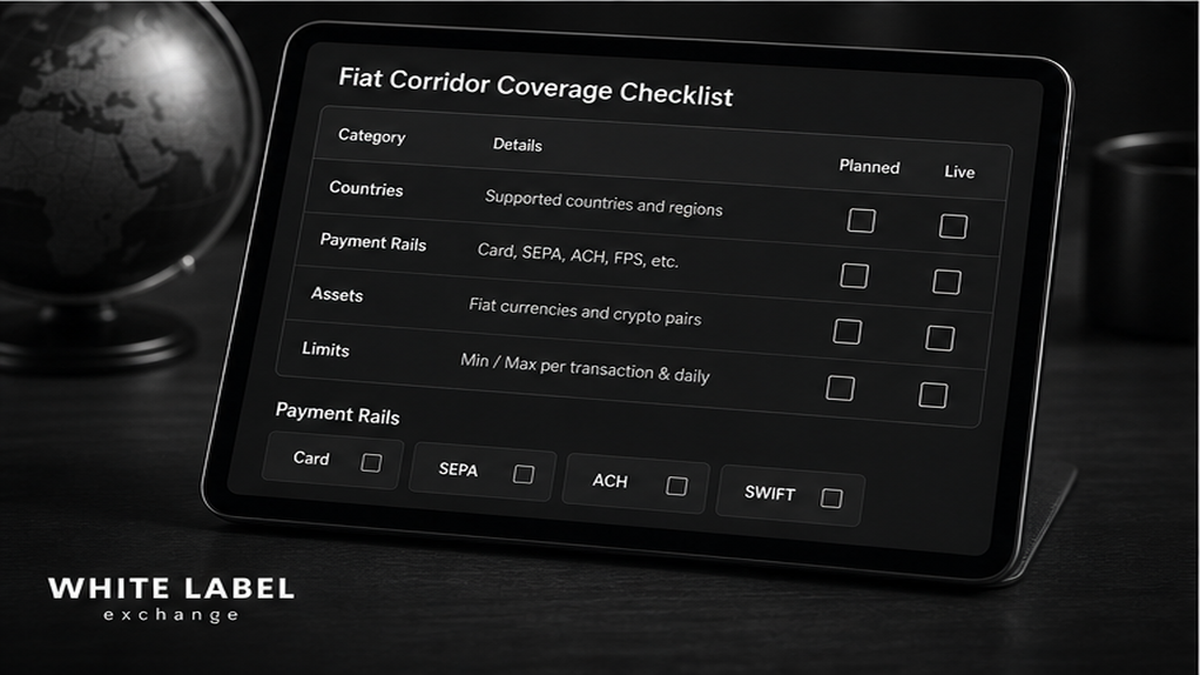
Coverage first, contracts second. List day-one needs, then ask providers to prove them.
- Countries and currencies: launch geos, fiat currencies, soft-launch allowlists.
- Payment rails: cards; SEPA / SEPA Instant; UK Faster Payments; US ACH / wire; SWIFT; local methods such as PIX or UPI where you sell.
- Assets, networks, limits: coins/chains you credit; min/max per method; how limits grow with KYC tier.
- On-ramp and off-ramp: same phase or phased – if off-ramp waits, write the interim cash-out policy.
- Speed and fee bands (industry ranges, not universal prices): cards often near-instant at higher fees (guides cite ~3-5% end-user or ~1.5-3.5% operator cost); ACH often 1-3 days cheaper; SEPA minutes to about a day. All-in gateway costs are commonly cited around 2%-7%+ – compare all-in, verify live pricing.
Do this: keep a corridor matrix (country x rail x currency x asset). Do not market “global fiat” until each cell is tested.
3. Compliance handoff: provider KYB vs your KYC/AML stack
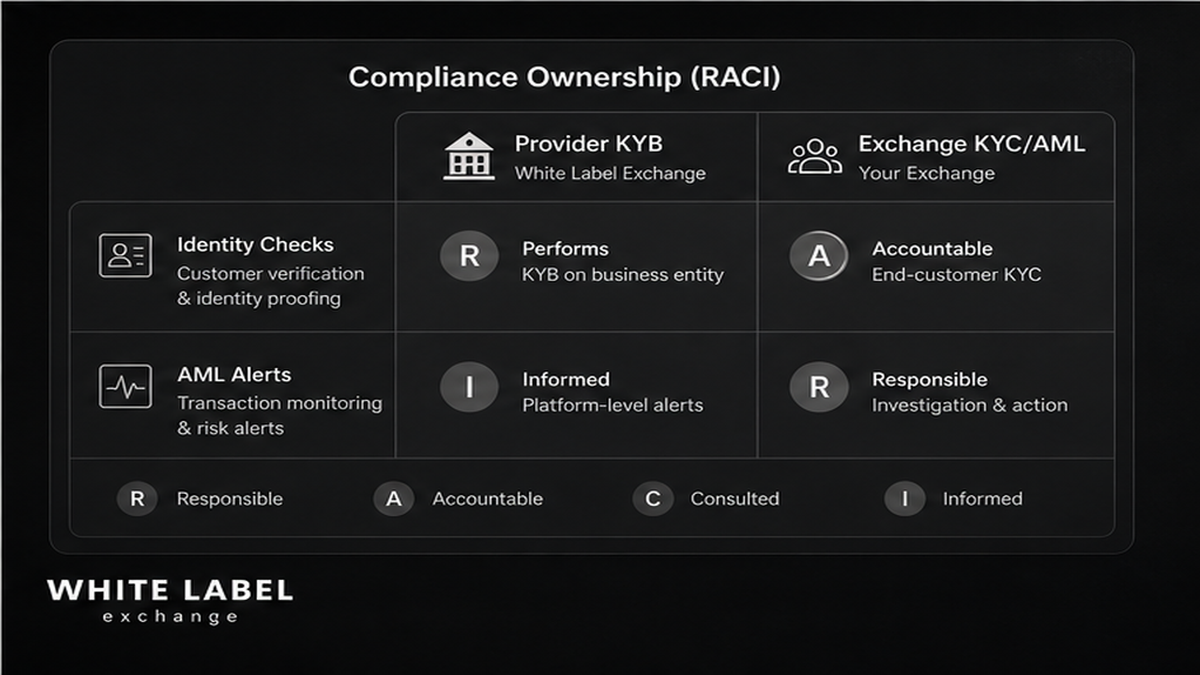
KYC means knowing who the user is. KYB means knowing who your business is. AML covers anti-money-laundering controls. MoR providers (for example Stripe Crypto Onramp, per their docs) often run payment KYC, sanctions, and fraud checks – your exchange still needs its own KYC/AML for trading accounts.
- Write MoR ownership: who takes the payment, who holds chargeback risk, who faces the bank.
- Align KYC tiers with limits: illustrative pattern – light checks for small amounts, ID for medium, proof of address / source of funds for large. Thresholds vary by provider and jurisdiction.
- Complete provider KYB before production keys.
- Map Travel Rule touchpoints where sender/recipient data may apply – get counsel (US MTL/FinCEN, EU MiCA/CASP, UK FCA/MLRs are frames to verify, not DIY legal advice).
- Define card fraud and chargeback playbooks before cards go live.
Collect verification before the first funding attempt – Shift Markets flags pre-deposit onboarding friction as a major drop-off. Basics: KYC, KYB, and AML.
Do this: one RACI per check. Do not assume the on-ramp replaces exchange AML.
4. Technical build: quotes, webhooks, reconciliation, failed payments
Money path: entry → KYC → payment → conversion/liquidity → delivery to wallet or balance. Make it idempotent and auditable.
- Create a quote so users see amount, fees, and ETA. Cache briefly (tutorials often ~60 seconds) and lock what you display.
- Open checkout safely: hosted URL, widget, or SDK. Sign parameters server-side (HMAC-style signing is common – check current provider docs). Keep secrets off the client.
- Verify webhooks (signature, timestamp, idempotency by tx id). Credit only on confirmed states – never trust “browser closed” as success.
- Model ledger states: pending, settled, failed, refunded – plus support copy for each.
- Reconcile daily (provider txs vs ledger) and alert on unmatched deposits.
- Choose settlement: pre-funded, post-settlement, or hybrid by rail. Plan liquidity float and a stuck-deposit playbook.
Workflow:
Quote → lock fees/amount → signed checkout → webhook verify → ledger credit → reconcile → support on failures.
What breaks first: ignored webhooks, recon gaps, single-bank derisking, card chargebacks, and vague ETAs. Use multi-partner banks/PSPs and automated recon.
Do this: sandbox E2E per rail, then limited geo prod with low limits. Do not go public on one bank rail with no failover. See core modules explained and White Label Exchange if you want payment hooks in a white-label core.
5. Provider path and go-live operator checklist
Choose a licensed on-ramp, an aggregator for routing, or bank/EMI rails – then plan a second path for derisking. Build vs buy: internal banking plus compliance can take months to years; a provider stack is faster, while economics may flip at scale (Shift Markets).
| Path | What you get | Watch-outs |
|---|---|---|
| Single on-ramp | Simpler contract and support | Coverage holes; single point of failure |
| Aggregator | One widget/API → many methods (vendor-claimed coverage varies) | Extra fee layer; clarify who owns KYC |
| Bank / EMI rails | Closer control of deposits/withdrawals | Heavier licensing and ops |
Before public fiat funding:
- Model documented (hosted / embedded / API / aggregator); corridor matrix complete
- Provider KYB approved; production keys issued; MoR/license duties written
- KYC tiers aligned to limits; quote + all-in fees shown; signed checkout; secrets server-side
- Webhooks verified; ledger rules for pending/settled/failed/refunded
- Reconciliation job + ops dashboard; chargeback escalation path
- Off-ramp live or explicit interim cash-out policy; backup rail for the critical corridor
- Sandbox E2E passed; limited geo pilot done; user-facing ETA/fees published
First 30 days: track Buy → funded conversion, rail success, time-to-credit; review chargebacks and AML weekly; reconcile unmatched deposits daily; adjust limits/fees; keep an outage playbook.
Do this: treat the checklist as a hard gate. Do not push fiat marketing until failover exists.
What to do next
Lock the model, fill the corridor matrix, write the MoR/KYC RACI, implement quote → webhook → recon, then run the go-live list with a soft geo pilot. More guides: White Label Exchange blog.
Reviewed by: White Label Exchange Editorial (white-label exchanges, exchangers, P2P, compliance ops).
Data integrity: models, rails, fee bands, settlement, and ops risks attributed to public 2026 sources (Cobo, Stripe fiat guide/docs, Fiat Republic, Shift Markets, Ramp Network, Onramper, MoonPay tutorials). Fee/country counts are vendor-reported – verify in dashboards. Wordstat was unavailable this pass and is not asserted. Not legal or investment advice.
Frequently asked questions
Hosted vs embedded on-ramp – which should we pick?
Hosted for fastest MVP and corridor tests. Embedded widget or SDK when funding is core UX. Headless API when you need full brand UI and can staff eng plus shared compliance.
Do white-label exchanges include fiat rails?
Many stacks include payment modules or partner hooks, but corridors, banking, and licenses are not automatic. You still select providers and own local compliance. See white-label crypto exchange.
On-ramp vs off-ramp – what should operators launch first?
On-ramp funds accounts; off-ramp returns fiat. Soft-launch on-ramp only if you publish how users exit and plan off-ramp or partner cash-out before scale marketing.
Single provider or aggregator?
Single provider is simpler. Aggregator can boost conversion/coverage via routing but adds a middle layer – compare all-in fees, support, and who owns KYC.
Who does KYC – us or the on-ramp?
Often the on-ramp runs payment KYC as MoR. Your exchange still needs KYC/AML for trading accounts. Align IDs and limits to avoid double friction or gaps.
What breaks first after go-live?
Ignored webhooks, recon mismatches, one bank that derisks, card chargebacks, and unclear ETAs. Fix those controls before you buy traffic.
Can we skip off-ramp at launch?
Short-term yes if you publish an interim exit path. Do not scale marketing on a one-way product.